

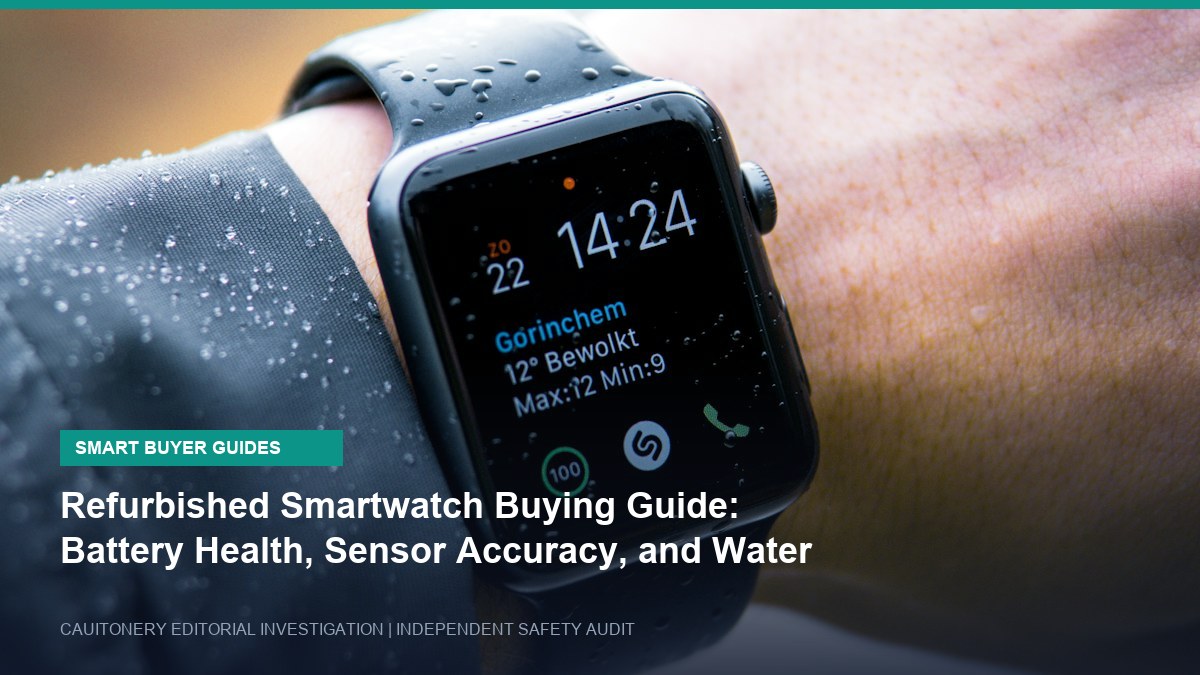
Smartwatches and biometric fitness trackers pack sophisticated health monitoring hardware into miniature wrist-worn enclosures. Because new flagship wearables frequently exceed \$400 to \$800, the refurbished secondary market has grown immensely popular. However, compact wearable devices face unique wear vectors that do not affect smartphones. Relying on our comprehensive refurbished smartwatch buying guide protects you against dying micro-batteries and compromised water resistance.
Why Wearable Diagnostics Differ from Smartphones
Unlike smartphones with large 3,000 to 5,000 mAh batteries, smartwatches utilize tiny 250 to 450 mAh cells. Because these compact cells are discharged and recharged every single day, they accumulate full discharge cycles at twice the rate of larger devices. A two-year-old refurbished smartwatch may struggle to provide even 8 hours of continuous operation on a single charge.
| Wearable Component | Factory Specification | Refurbished Wear Risk | Testing Methodology |
|---|---|---|---|
| Lithium-Polymer Cell | 18 – 36 Hours Run Time | Sub-8 Hour Battery Life | 30-Minute GPS Workout Battery Drain Audit |
| Optical Heart Rate (PPG) | Medical-Grade Pulse Tracking | Scratched Sensor Glass / Signal Noise | Live Comparison Against Chest Strap / Fingertip Pulse Oximeter |
| Acoustic & Water Gaskets | 5 ATM / 50M Water Resistance | Aged Adhesive / Seal Degradation | Never Submerge; Inspect Gasket Lines Under Magnification |
| OLED Display Panel | High Brightness (1000+ Nits) | Permanent Watch-Face Burn-In | Full Screen Solid White/Gray Test Background |
5 Critical Diagnostics to Execute on Refurbished Wearables
1. The 30-Minute High-Load Battery Discharge Test
When unboxing a refurbished smartwatch, immediately charge the device to 100%. Next, launch an outdoor running or cycling workout with GPS tracking enabled and display brightness set to maximum. A healthy battery should lose no more than 4% to 7% capacity over 30 minutes. If the battery drops by 15% or more in half an hour, the internal lithium cell is chemically exhausted and requires immediate replacement.
2. Inspect the Underside Optical Sensor Crystal
The rear sensor cluster houses photodiode sensors that measure heart rate (PPG) and blood oxygen saturation (SpO2). Heavy everyday wear, abrasive dust, and corrosive sweat can create micro-scratches on this ceramic or sapphire glass window. Severe scratching scatters optical light pulses, leading to wildly inaccurate heart rate spikes or completely failed health readings.
3. Treat Factory Water Resistance as Compromised
Manufacturers achieve 50-meter water resistance (5 ATM) using precision rubber micro-gaskets and cured pressure adhesives. As devices age—and especially if third-party refurbishers pry open the casing to replace screens—these watertight seals are compromised. Never wear a pre-owned or refurbished smartwatch in swimming pools, saunas, or hot showers, regardless of its original factory rating.
4. Screen for Persistent OLED Burn-In
Wearers frequently keep Always-On Display (AOD) active with high-contrast digital clock dials. Over thousands of hours, static white numerals can permanently burn into the organic sub-pixels. Display a full-screen solid gray image in a dark room to confirm the panel is completely free from ghostly dial outlines.
5. Test Microphone and Haptic Vibrator Coils
Compact linear resonant actuators (haptic engines) endure millions of pulses over a wearable’s lifetime. Place a test call using the watch speaker and microphone, and toggle high-intensity alarm vibrations. Rattling or buzzing sounds indicate a loose haptic motor or damaged acoustic mesh.
Frequently Asked Questions About Refurbished Smartwatches
Is manufacturer refurbished better than third-party refurbished?
Yes, significantly. Official Apple Certified Refurbished or manufacturer-renewed units invariably include a brand new exterior casing, a brand-new battery cell, and full factory water-tightness guarantees.
Can I replace a dying smartwatch battery myself?
Due to miniature glued assemblies, proprietary flex cables, and micro-soldered connectors, DIY smartwatch battery replacements have an extremely high failure rate. Professional repair or factory replacement is strongly advised.