






Lithium-ion batteries pack extraordinary energy density into smartphones, laptops, power tools, electric scooters, and power banks. However, internal chemical degradation, physical impacts, or substandard charging bricks can trigger catastrophic thermal runaway—resulting in uncontrollable fires and toxic gas release. Implementing disciplined lithium ion battery safety practices is essential for protecting your electronic hardware and household safety. In this practical Cauitonery guide, we explain the early warning signs of battery failure, safe charging habits, and how to respond in a thermal emergency.
🛡️ Key Battery Safety Takeaways
- Thermal Runaway Danger: When an internal cell short-circuits, temperature spikes exceed 600°C within seconds, igniting neighboring cells.
- The 20-80 Charging Rule: Maintaining battery charge between 20% and 80% minimizes lithium plating and extends cell lifespan significantly.
- Counterfeit Charger Hazard: Cheap uncertified power bricks lack overcurrent and thermal cutoff circuits, posing grave fire risks.
- Swollen Battery Protocol: A bulging device chassis indicates internal gas buildup; immediately stop charging and isolate the device safely.
The Science of Lithium-Ion Thermal Runaway
A standard lithium-ion battery consists of an anode, a cathode, an organic liquid electrolyte, and a micro-thin polymer separator. Under normal operation, lithium ions shuttle smoothly between electrodes. However, manufacturing flaws, puncture impacts, or prolonged overcharging can breach this delicate separator.
When the separator fails, an internal short circuit triggers an exothermic chain reaction called thermal runaway. The liquid electrolyte vaporizes, generating flammable hydrocarbons and oxygen, leading to intense jet-flame fires that standard water cannot easily extinguish. Following established lithium ion battery safety protocols prevents these conditions from forming in the first place.

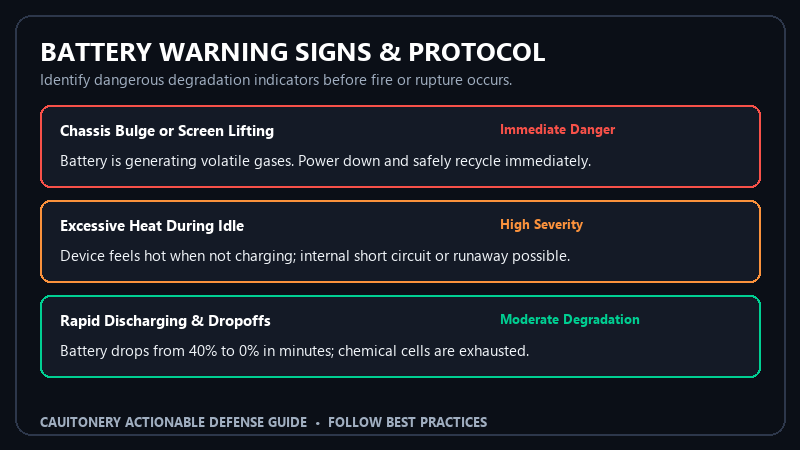
Lithium Battery Hazard Severity Matrix
Recognize the physical symptoms of failing battery cells and understand the required response protocol:
| Battery Condition | Physical Symptoms | Severity Level | Immediate Action |
|---|---|---|---|
| Normal Aging | Slower charging, gradual capacity drop to ~80% | Safe / Normal | Standard maintenance, continue normal use |
| Overheating During Charge | Device too hot to touch comfortably (> 45°C) | Moderate Hazard | Unplug immediately, allow to cool in open air |
| Swollen / Bulging Chassis | Screen lifting, trackpad stiff, battery casing puffy | High Danger | Never charge, place in fireproof box, recycle |
| Hissing / Smoke / Odor | Sweet acetone chemical smell, audible hissing, smoke | Active Runaway | Evacuate area, call emergency services (911) |
6 Non-Negotiable Safe Charging Habits
1. Never Charge Devices on Beds, Sofas, or Pillows
Soft bedding traps heat radiated by the device and charger. As ambient temperature rises around the battery, the chemical reaction accelerates, dramatically increasing the risk of thermal runaway. Always charge phones, laptops, and power banks on hard, non-flammable surfaces like desks, stone countertops, or wooden tables.
2. Avoid Overnight Charging on Non-Certified Power Bricks
Authentic chargers from reputable brands incorporate microcontrollers that trickle-charge or stop drawing power once battery voltage reaches 4.2V per cell. Uncertified knockoffs bought on bargain marketplaces often lack over-voltage cutoff circuits, continually pushing current into saturated cells. Make sure to check our precautions for smart home appliance precautions when planning your charging stations.
3. Practice the 20-80 Rule to Maximize Battery Lifespan
Deep discharging (0%) and continuous full saturation (100%) subject lithium battery chemistry to high physical and mechanical stress. Enabling “Optimized Battery Charging” on iOS or “Protect Battery” on Android caps charging at 80% until you need it, cutting chemical wear and tear in half.
4. Stop Using and Charging Any Swollen Battery Immediately
If your laptop trackpad suddenly becomes difficult to click, or your smartphone screen separates slightly from its chassis, the battery cells have begun off-gassing. Never plug a swollen battery into a charger. Pushing electric current into a compromised cell is the leading cause of sudden fires. Review our diagnostic criteria in the laptop battery cycle diagnostics guide to recognize hardware wear early.
5. Store Idle Devices at 50% Charge
If you plan to store an electric scooter, drone, camera, or old phone in a closet for several months, charge it to approximately 50% first. Storing lithium batteries completely empty can cause cell voltage to drop below the critical safety threshold, rendering the battery permanently dead and unchargeable.
6. Adhere to Fire Safety Standards
The safety experts at the National Fire Protection Association (NFPA) Lithium-Ion Safety Protocols emphasize that water should not be applied to burning lithium batteries unless immense volumes can be sustained; instead, use dry chemical Class D or ABC fire suppressors, or let the battery exhaust in a fire-safe outdoor containment container. Workplace protocols from the OSHA Lithium Battery Safety Bulletins similarly underscore mechanical isolation.
Frequently Asked Questions (FAQ)
Can I put out a lithium-ion battery fire with a standard household fire extinguisher?
Standard household ABC dry chemical extinguishers can knock down flames from surrounding combustible materials, but they may not extinguish the core chemical reaction inside the battery. Evacuate the premises and call emergency fire services immediately.
Is fast charging bad for battery health?
Modern fast charging generates higher heat, which can gradually accelerate cell capacity degradation over 2-3 years. If you do not need an urgent charge, using a standard 10W-15W charger overnight produces less thermal stress.
Can I dispose of a swollen battery in regular household trash?
No! Never place lithium batteries in normal curbside trash bins. Compactor trucks frequently crush batteries, causing massive garbage truck and landfill fires. Take old batteries to certified electronic waste recyclers or retail drop-off kiosks (e.g., Call2Recycle).
What temperature range is safest for charging lithium batteries?
Lithium-ion cells charge most safely between 10°C and 35°C (50°F to 95°F). Charging below freezing (0°C) can cause irreversible lithium metal plating on the anode, resulting in severe short-circuit hazards.


